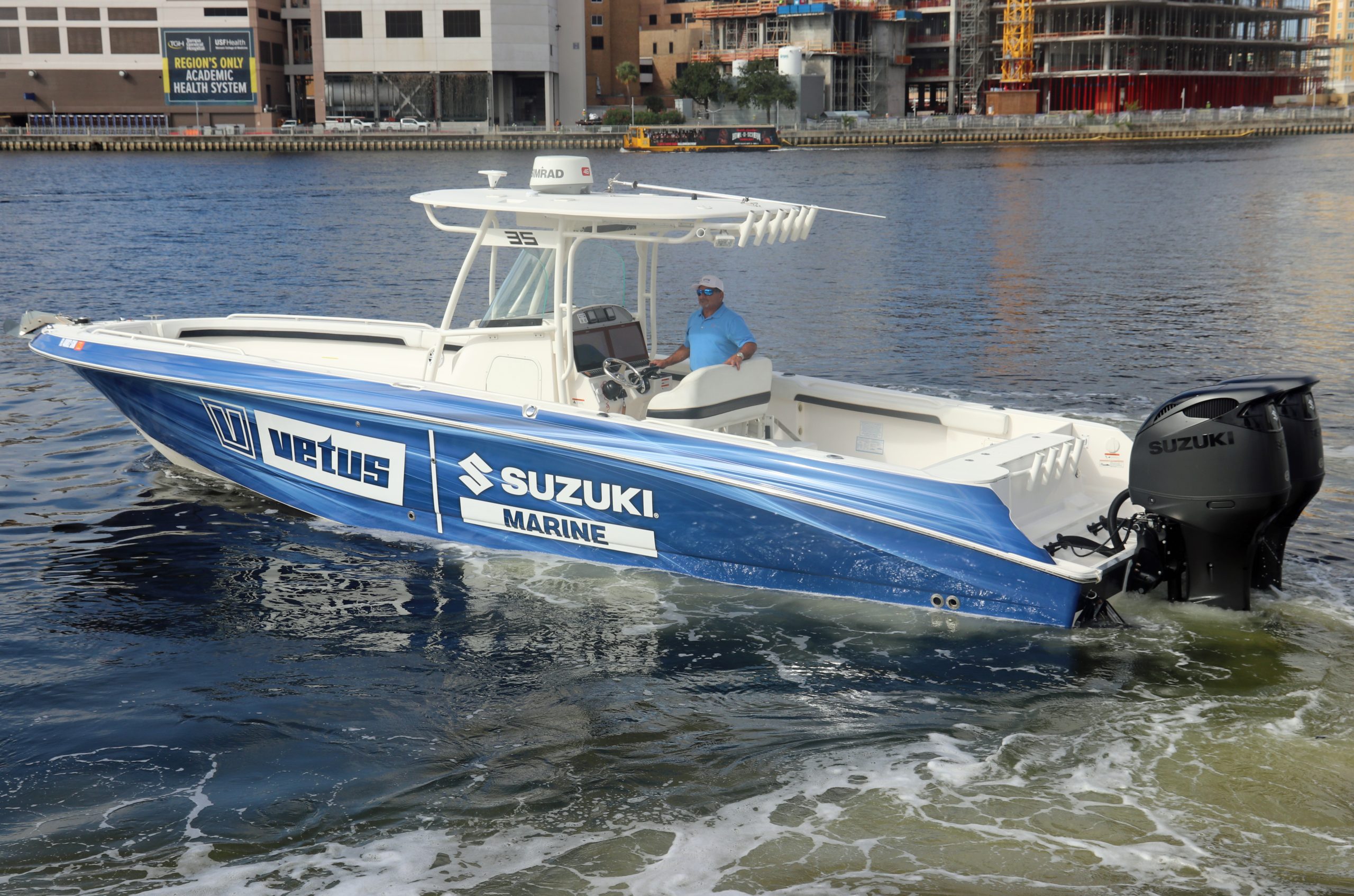
New Partnership Will Bring Enhanced Docking Control, Increased Confidence for Owners of Suzuki V6 Outboards With Integrated Steering
At today’s 2025 International Boat Builders Exposition and Conference (IBEX) in Tampa, Florida, Suzuki Marine USA announced a new technology collaboration with VETUS, Inc., a world leader in bow thruster systems for the recreational boating industry.
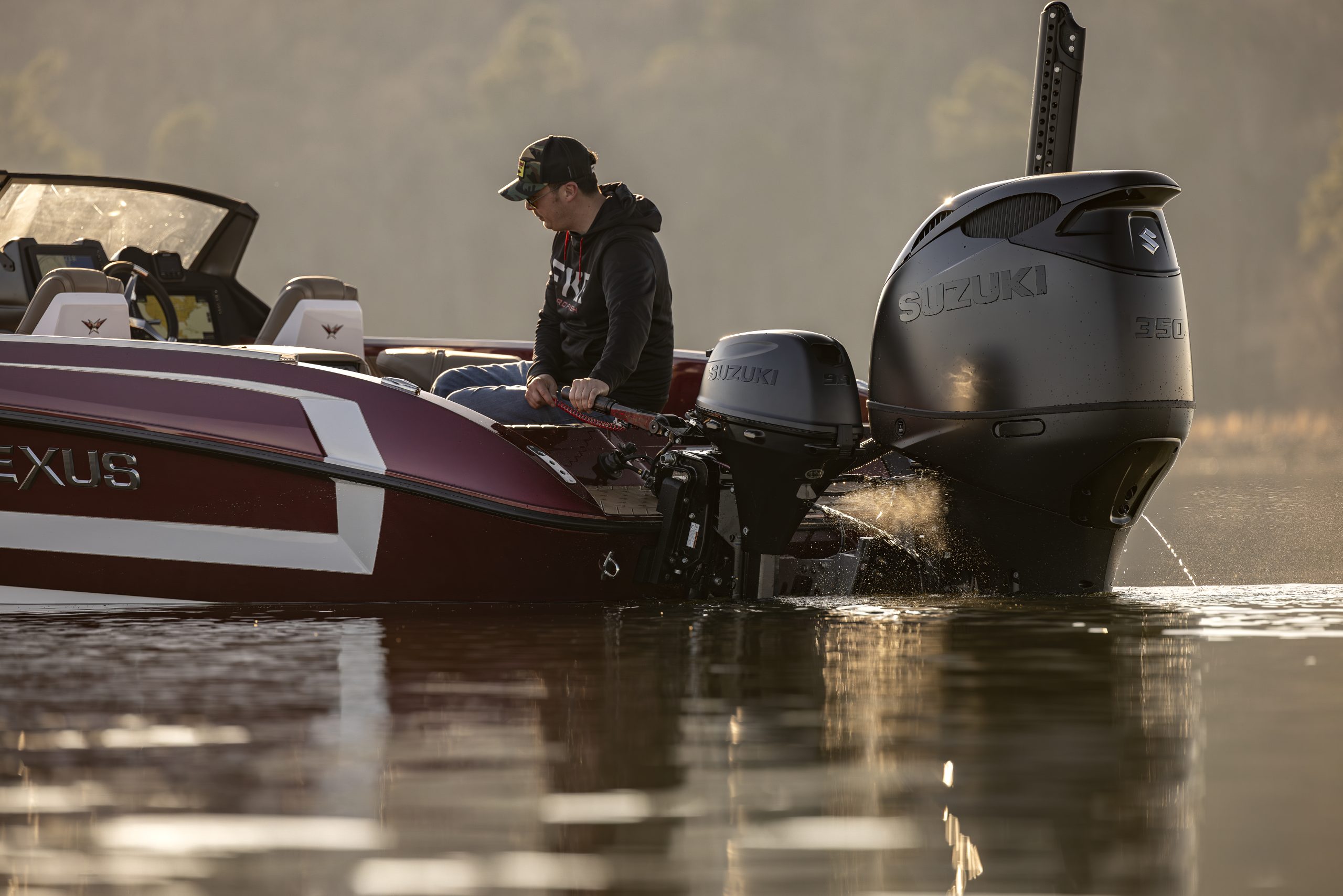
This collaboration ensures full compatibility between all VETUS BOW PRO thruster systems and Suzuki’s flagship V6 DF350AMD and DF300BMD outboard models. By integrating engines, steering, and bow-thruster controls through a single streamlined joystick interface, Suzuki and VETUS are delivering a better boating experience.
The benefits of this collaboration will be especially evident in a variety of close-quarter boating situations, such as docking in the face of wind or current and putting a boat on a trailer at a busy launch ramp. The use of this integrated technology — combined with the added control of Suzuki’s contra-rotating twin propellers in forward and reverse — will help boaters perform tricky close-quarters maneuvers with confidence.
It’s well understood that stress around docking in crowded, tight spaces, strong currents and windy conditions is one of the key barriers to new people entering the boating lifestyle. “We are dedicated to providing boaters with a better, safer and more enjoyable experience every time they take to the water,” said Brandon Cerka, Vice President Sales & Marketing for Suzuki Marine USA. “By collaborating with an industry leader like VETUS and combining our technologies and expertise, we are finding new ways to delivering what boaters truly want — a great time on the water with family and friends,” added Cerka.
“We are proud to support Suzuki Marine with proven thruster solutions that integrate seamlessly with joystick systems to deliver precise, confident control,” said VETUS Maxwell U.S., Inc. President Christopher DeBoy. “Our BOW PRO thruster technology offers smooth, proportional response—ideal for tight-quarters maneuvering and low-speed docking. We look forward to growing this collaboration and supporting future integrations that continue to elevate the on-water experience.”